The goal of building a mature AI security program is not just to secure AI. It is to reduce what AI can do when something goes wrong.
Artificial intelligence has moved quickly from experimentation to everyday business use. Employees are using AI to summarize information, analyze data, draft content, research decisions, and move work forward faster.
That speed creates value. It also changes the way organizations need to think about cybersecurity.
The first step in AI security is getting the fundamentals right: protect identities, review access, guide employees on approved tools, and set expectations for sensitive data. However, organizations that rely on AI across departments, systems, and workflows need to go one step further. They need a mature AI security program that treats AI risk as part of the broader security model.
A mature AI security program starts with a clear question: what could AI do if something goes wrong?
AI Risk Is Bigger Than a Single AI Tool
So, what is AI Risk? AI risk is rarely one thing. It is the combination of who can use AI, what that person can access, how sensitive the data is, where the data goes, and whether anyone can detect suspicious activity.
Many organizations begin their AI security conversations by asking whether a specific tool is secure. That question matters, but it is too narrow.
A practical way to think about it is this:
AI Risk = Identity Exposure + Access Breadth + Data Sensitivity + Detection Gaps
This model helps leaders move past generic AI concerns and focus on the conditions that increase real business risk. If an attacker compromises an account, AI can amplify whatever that account can reach. If sensitive data is overshared, AI can make it easier to find and summarize. If outputs can leave the environment without enough oversight, the risk does not end with the prompt.
The question now becomes, what can I do to increase my AI security?
Strengthen Identity as the First Security Boundary
Identity is and will remain the primary security boundary in an AI-enabled environment.
If an attacker manages to assume the user’s identity, AI can amplify whatever access that user already has. That makes strong identity protection one of the most important controls in a mature AI security program.
Organizations should prioritize stronger authentication, risk-based access decisions, and additional protections for privileged or high-impact users. This does not mean every organization needs the most advanced identity architecture on day one. It does mean leaders should treat identity protection as a core AI security control.
The more confidently an organization can verify who is using AI, the more confidently it can manage what AI can access.
Minimize What AI Can See
The most AI-specific security priority is reducing unnecessary access.
AI can only summarize, search, or reason over information that a user or connected system can reach. That makes the breadth of access a critical part of AI risk.
Mature programs move beyond one-time access reviews. They:
- Build a habit of limiting standing access
- Create a schedule for reviewing permissions regularly
- Reduce broad access to sensitive repositories
For higher-risk systems or privileged roles, organizations should consider temporary, approved, and monitored access instead of long-term access that remains open by default.
The principle is simple: the less an account can access, the less an attacker can ask AI to summarize if that account is compromised.
Govern the Data Before AI Finds It
AI makes data governance more urgent because it can make overshared information easier to discover.
Most organizations have some level of data sprawl. Files live in shared drives, Teams channels, SharePoint sites, inboxes, and legacy folders. Over time, sensitive information can land in places that were never designed for long-term storage or broad visibility.
A mature AI security program identifies where sensitive data lives, classifies it appropriately, and limits exposure where possible. This includes reviewing shared repositories, using labels where appropriate, segmenting sensitive information, and establishing clear rules for data that should not be used in AI workflows.
The best AI security control may not start inside the AI tool. It may start by fixing overshared data.
Monitor How AI Is Being Used
Mature AI security requires visibility.
Organizations should monitor how AI is being used, not just whether it is being used. Leaders need enough insight to identify unusual patterns, such as sudden changes in AI activity, broad aggregation behavior, sensitive searches, or AI use that follows risky sign-in activity.
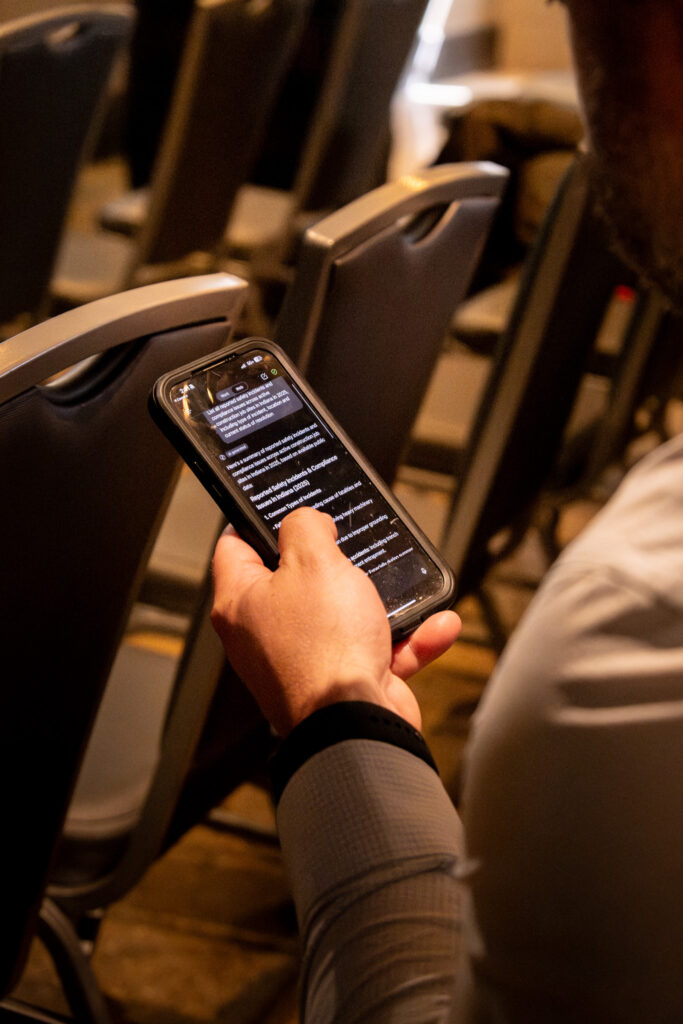
This does not necessarily mean publishing sensitive detection logic or creating a surveillance-heavy culture. It means security teams need practical visibility into AI usage patterns so they can respond when behavior looks unusual or risky.
If AI becomes part of daily work, it should also become part of the organization’s security monitoring strategy.
Validate the Controls Before an Incident
A mature program does not stop at policies and controls. A truly mature program tests whether those controls work.
Organizations should validate AI security through realistic scenarios: a compromised user account, an employee using an unapproved AI tool, sensitive data being overshared, or AI being used to summarize information that should have been restricted.
Tabletop exercises can help leadership teams understand the risk without turning the effort into a technical red-team engagement. The goal is to answer practical questions like these before an incident happens:
- Would we know if a compromised account used AI to find sensitive data?
- Could we tell whether broad access created unnecessary exposure?
- Do employees know what to do if they accidentally share sensitive data with an AI tool?
- Can security teams see enough activity to investigate?
Controls that are not tested are just assumptions. And assumptions can create risk.
Mature AI Security Reduces the Blast Radius
Organizations do not need to solve AI security overnight. They need to mature in the right direction.
The goal is not just to secure AI. The goal is to reduce what AI can do when something goes wrong.
That means protecting identities, limiting unnecessary access, governing sensitive data, monitoring AI activity, and validating that safeguards work as intended.
AI can help organizations move faster, but speed without control creates risk. Leaders who build AI security into their broader cybersecurity program will be better prepared to adopt AI confidently, respond to threats faster, and protect the information their teams, clients, and communities trust them to safeguard.
My team at GadellNet is uniquely positioned to help your organization utilize AI in a secure manner. Contact us to learn how.