Most organizations sense they need a technology strategy. What they often don’t know is how to build one or where to start.
The difference between where your technology stands today and where it needs to be to support your mission creates real risk. Outdated infrastructure limits what your team can accomplish. Security vulnerabilities expose your data. Inefficient processes drain resources you’d rather spend on growth. And without a coherent plan, every technology decision becomes reactive, expensive, and misaligned with your actual business goals.
Technology consulting bridges that difference.
For small and medium-sized organizations, nonprofits, and schools, technology consulting often fills the role of a fractional CIO or strategic IT leader. This guide walks through what technology consulting is, the key areas where it makes the biggest impact, how to choose the right partner, and the trends shaping the field today.
Defining Technology Consulting
Technology consulting means bringing in expert leadership to align your technology with your business goals. Not for the sake of having the latest tools, but to solve real problems: tighten operations, cut costs, and build a competitive advantage.
A good technology consultant understands your industry, your constraints, and your ambitions. They partner with you to make decisions that matter.
Technology advisory services cover a wide range of services:
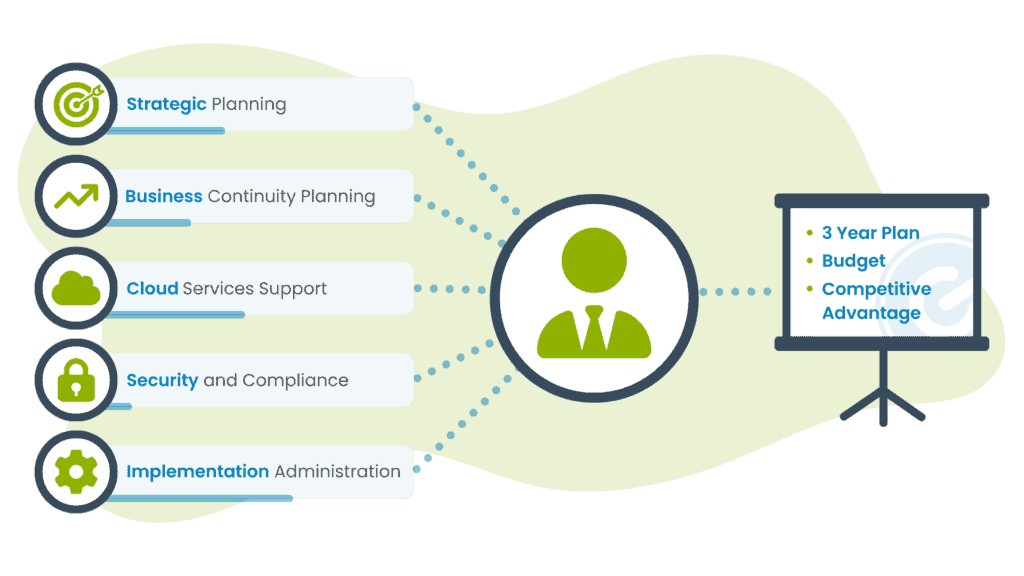
- Strategic Planning and Technology Roadmap Development
- AI Preparedness and Implementation
- Business Continuity Planning
- IT Risk Assessment, Management, and Mitigation
- Security and Compliance Consulting
- Implementation Administration and Support
Strategic technology advice is most impactful when aimed at helping businesses gain a competitive advantage through innovation and differentiation, streamline operations through process optimization and cost reduction, and enhance overall performance by improving decision-making and customer experiences. Whatever your specific needs, these core objectives underscore the effective use of technology in driving business success.
Technology consultants are known by many different names (and acronyms). Some of the most common include Virtual Chief Information Officer (vCIO), Fractional CIO, Virtual IT Director, Virtual Chief Technology Officer (vCTO), IT Management Consultant, and Remote IT Leadership. Regardless of the title, the responsibility remains the same—they keep the organization on track in all things IT-related.
Your team’s technology leaders should deeply understand the industry’s latest trends and best practices. They should work to develop a comprehensive strategy that aligns with the goals and objectives of your organization. Other key qualities of a strong technology partnership are:
Adaptability: IT consultancy adapts to the evolving nature of technology and business.
Problem-Solving: Consultants address specific challenges and provide tailored solutions.
Investment in Your Success: Strategic consultants need to invest in getting to know your business and industry to plan for solutions that will meet your needs.
Key Areas of Technology Consulting
As already mentioned, technology consulting can cover a wide variety of capabilities across different industries and organizations. However, a few key areas are important across all types of businesses.
IT Infrastructure Planning and Optimization: Streamlining and enhancing the efficiency of your organization’s virtual and physical IT infrastructure is fundamental. Strategic consulting advice aims to enhance the efficiency, scalability, and reliability of an organization’s IT systems and networks. Consultants assess the current state of IT infrastructure, identify bottlenecks, and recommend improvements. This may involve the adoption of cloud computing, server virtualization, and network optimization to streamline operations. A technology consultant will advise on prioritizing needs against your organization’s budget, maximizing your investment, and providing you with an expenditure roadmap. The main goals are to improve performance, reduce costs, and ensure scalability.
Artificial Intelligence (AI) Consulting: Integrating AI into your small business or Non-profit operations can be an affordable way to make a big impact. AI can streamline operations, uncover insights, and enhance customer experiences, but only when implemented thoughtfully and securely. Strategic consulting ensures that every step supports your organization’s goals, starting with a readiness assessment to evaluate data quality, governance, and cultural preparedness. From there, consultants provide training and enablement to build confidence and skills across your team, reducing resistance and accelerating adoption. Consultants will assist your leadership in cutting through the noise of numerous AI tools to identify solutions that align with your workflows, budget, and growth objectives.
Cloud Solutions Advisory: Often, organizations require guidance on adopting and optimizing cloud-based solutions. Cloud solutions advisory focuses on helping organizations migrate to and optimize their use of cloud-based services. Consultants guide clients in selecting the right cloud platforms, developing migration strategies, and optimizing cloud usage for cost-effectiveness and performance. Cloud solutions consulting also ensures data security and compliance in the new cloud environment. Consultants often provide or recommend a training plan for your employees as they adjust to the new cloud infrastructure. Using a consultant for a cloud migration increases flexibility, scalability, and cost-effectiveness.
Cybersecurity Consulting: Cybersecurity consulting addresses the protection of digital assets, networks, and information from cyber threats and attacks. Consultants usually begin with an IT Risk Assessment followed by creating a comprehensive IT security policy that aligns with your organization’s needs and goals. They will evaluate your organization’s cybersecurity posture, identify vulnerabilities and threats, and recommend measures to strengthen security. These recommendations can include everything from implementing firewalls to improving encryption to identity management to turning on Multi-Factor Authentication to a host of other security measures to safeguard against cyber threats.
Business Continuity Planning: Business Continuity Planning (BCP) is a proactive approach organizations adopt to ensure they can continue essential operations and services during and after a disruptive event. Disruptions can include natural disasters, cyberattacks, equipment failures, or unforeseen events that might impact normal business operations. The goal of BCP is to minimize downtime, maintain critical functions, and safeguard the overall resilience of the organization.
A strategic technology consultant is crucial in developing and implementing a robust BCP. The role includes conducting a thorough risk assessment, evaluating the potential impact of disruptions on business processes and functions, and designing and implementing a resilient technology infrastructure that can withstand disruptions. The whole project should include the development and implementation of robust data backup and recovery strategies. Finally, consultants will ensure that employees are trained on BCP procedures and have access to documentation.
Expertise in IT and technology ensures that the organization’s digital infrastructure is resilient and capable of withstanding disruptions.
Digital Transformation Consulting: Digital Transformation Consulting is the integration of digital technologies to fundamentally change business processes and customer experiences. Digital transformation can include introducing process automation, improving Artificial Intelligence (AI) readiness, and driving data-driven decision-making with data management and business intelligence reporting.
Expanding digital transformation at your organization should enhance agility, innovation, and customer satisfaction. Technology consultants assist organizations in developing and implementing strategies for digital transformation. This includes evaluating and inventorying existing processes, recommending short-term and long-term technological solutions, and fostering a culture of innovation.
In short, technology consulting should contribute to business efficiency by streamlining processes for enhanced productivity, optimizing resources, reducing unnecessary expenses, and keeping your organization ahead of the market through technological advancements.
Benefits of Technology Consulting
Investing in consulting services offers numerous advantages for organizations navigating the complex and ever-changing technology landscape.
- Agnostic Expertise for Your Organization’s Tech Stack: One key benefit lies in the expertise and guidance provided by technology consultants who deeply understand industry best practices and emerging trends. These professionals offer strategic insights tailored to an organization’s specific needs, helping it stay ahead in a rapidly evolving technological environment. They offer unbiased advice on a wide range of topics like:
- Cyber Liability Insurance Coverage
- Office Relocations
- Using Open Source AI
- Managing EOL infrastructure
- Ongoing Strategic Planning Support: Strategic IT planning is a cornerstone of effective technology consulting. By aligning technology initiatives with overarching goals, organizations can ensure that their IT investments contribute directly to the company’s success.
- Development of Technology Roadmaps: Technology consultants play a pivotal role in this process, helping organizations articulate their strategic vision and translating it into a comprehensive IT roadmap. This roadmap serves as a guide for the systematic implementation of technology solutions, ensuring that they are aligned with current objectives and scalable for future growth.
- Alignment of Solutions and Goals: Technology consulting aligns organizational goals with technological solutions. Consultants collaborate closely with organizations to understand their unique challenges and opportunities, identifying the most suitable technologies to drive efficiency, innovation, and competitiveness.
- Enhanced Organizational Efficiency: Consultants are less expensive than full-time employees but take an active role in streamlining processes and workflows for improved productivity. Whether implementing digital transformation initiatives, optimizing IT infrastructure, or advising on cloud solutions, technology consulting ensures a harmonious technology integration to improve current practices.
- Innovation and Competitiveness: Consultants foster an environment for continuous innovation and focus on expanding a competitive edge through technological advancements. This approach empowers organizations to navigate the complexities of the digital era, fostering innovation, efficiency, and sustained growth.
Choosing the Right Technology Consulting Partner
The role of IT leadership is integral to an organization’s effectiveness, but not all consulting partners are created equally.
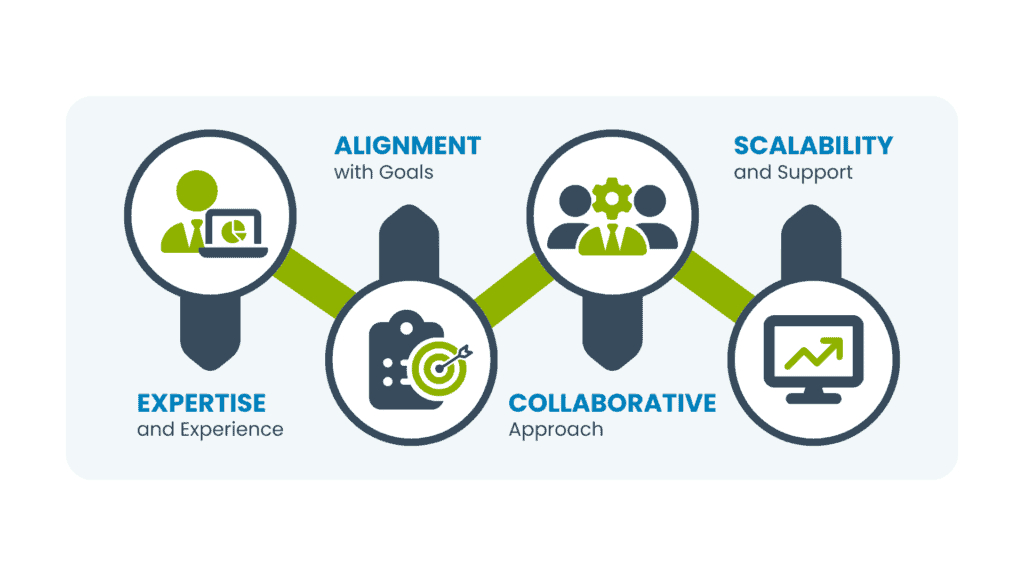
Selecting the right technology partner is a critical decision that can significantly impact the success of your technology initiatives. Here are four key considerations to keep in mind when choosing a technology partner:
Expertise and Experience
Expertise: Assess the technology partner’s domain proficiency in relevant areas. Consider their familiarity in handling projects similar to yours.
Experience: Evaluate the partner’s track record and the duration of their presence in the industry. A technology partner with a proven history of successful implementations is more likely to deliver quality results.
Alignment with Goals
Understanding Objectives: Ensure the technology partner clearly understands your organization’s goals and objectives. They should be able to articulate how their services align with your broader strategic vision.
Customization: Look for a partner who can provide customized solutions tailored to your specific needs. A one-size-fits-all approach may not be suitable for the unique challenges of your organization. The partner should also be wary of over-customization to prevent implementing an unsustainable solution.
Collaborative Approach
Communication and Collaboration Skills: Effective communication is essential for a successful partnership. Choose a technology consultant with a proven track record of strong communication skills and a collaborative approach. They should be willing to work closely with your team to understand your requirements and address any concerns. Probe potential consultants to learn more about their preferred communication methods and tools.
Flexibility and Adaptability: Technology landscapes and business environments evolve. Ensure that your partner is flexible and adaptable, capable of adjusting to changing project requirements and unexpected challenges. Consultants should demonstrate proven ability to proactively address changes.
Scalability and Support
Scalability: Consider the scalability of the technology solutions offered by the partner. Ensure that the solutions can grow with your organization and accommodate future expansion or changes in requirements.
Ongoing Support: Assess the partner’s ongoing support services. A reliable technology partner provides ongoing support and maintenance to address issues, implement updates, and ensure the continued smooth operation of the implemented solutions.
Carefully considering these key factors is essential in selecting a technology partner that not only possesses the technical capabilities required for your organization but also aligns with your goals, fosters collaboration, and provides long-term support for the success of your technology initiatives.
Case Study: Safely Advancing a Non-Profit’s Technology Initiatives Across Multiple Locations
An education-focused non-profit in Indiana hired GadellNet to help meet several technology initiatives for their locations. Our consultants began with an assessment of current environments and, based on the results, created a roadmap that would allow the organization to meet its budget and advancement goals.
Challenges: The top priority is to ensure their current technology environment is optimized for cybersecurity best practices to minimize risk. As their organization plans expansion to meet the growing needs of the communities they serve, they need appropriate expense estimates for long-term budgeting. As a non-profit organization, they must have visibility to the most cost-effective technology solutions.
Year 1: Focus on Security
- Completed a full Cybersecurity Audit and Cybersecurity GAP analysis
- Completed Cyber Security Transformation
- Optimized cyber insurance coverage
- Implemented company-wide MFA including over VPN
- Created a migration plan for the main file server scheduled for End-of-Life in 2023
Year 2: Focus on Infrastructure
- Completed 2 new Office move-ins and setups
- Completed a full software stack review to identify needs, concerns, costs, and tools considered for consolidation.
- Migrated main file server off of Windows 2012 R2 which was going End-of-Life in 2023
- Completed a Teams for Voice migration
Year 3: Focus on Sustainable Improvement
- 10 location build-out to include installing new firewalls, switches, and batteries
- Rolling out SentinelOne integration and Intune encryption
“[Our consultant] provides guidance and mentorship, provides pros and cons of recommendations, and finds budget-appropriate solutions. He really understands what our mission is and he tries to be in that mindset when he works with us.”
— CFO, Indiana Non-Profit
Trends in Technology Consulting
Just as the technology landscape is always evolving, it is expected that the skills and offerings of technology consulting will be changing, as well. There are several emerging technology trends that consultants will need to stay on top of to best serve their partners.
Artificial Intelligence (AI) and Machine Learning (ML) in Technology Consulting: Artificial Intelligence (AI) and Machine Learning (ML) are reshaping how organizations leverage data and automate decision-making processes. Technology consultants will work with an organization to leverage this technology on everything from implementing time-saving processes to utilizing advanced algorithms and predictive analytics to extract valuable insights to enhance overall business efficiency. In addition, AI and ML solutions will provide innovative ways to solve complex business challenges like optimizing workflows and predicting customer behavior. Consultants will use AI and empower clients to use AI to work for their organizations.
Cybersecurity Consulting: Addressing the Evolving Threat Landscape: As cyber threats continue to rise, cybersecurity consulting has become vital for modern business operations. Technology consultants lead the way in developing and deploying robust cybersecurity solutions to shield organizations from constantly advancing attacks. Such measures include conducting comprehensive IT risk assessments, developing business-specific security strategies, and implementing advanced technologies like managed detection and response. With the increasing frequency and sophistication of cyberattacks, cybersecurity consulting ensures that businesses can safeguard their digital assets, maintain regulatory compliance, and respond effectively to security incidents.
Cloud Solutions and Digital Transformation Advisory: Cloud solutions and digital transformation consulting are key elements of modern technology advising. Consultants assist organizations in implementing and optimizing cloud services to improve agility, scalability, and cost savings. Additionally, digital transformation consulting is focused on fundamentally altering business processes and customer experiences through digital technologies. Technology consultants are instrumental in formulating strategies for smooth digital transformations, empowering organizations to adapt to shifting market conditions and remain competitive in the digital age.
Sustainable Technology Solutions: Green IT Consulting: Sustainability is emerging as a significant trend in technology consulting, with a growing emphasis on Green IT. Consultants are assisting organizations in adopting eco-friendly and energy-efficient technologies, reducing their carbon footprint, and aligning IT strategies with environmental goals. This involves optimizing data center efficiency, promoting responsible e-waste disposal, and implementing energy-efficient hardware and software solutions. Green IT consulting not only addresses environmental concerns but also contributes to cost savings and enhances corporate social responsibility, reflecting a broader awareness of the environmental impact of technology operations. As sustainability becomes a key organizational objective, technology consultants guide businesses toward responsible and eco-conscious technology practices.
Frequently Asked Questions
What is strategic technology consulting?
Strategic technology consulting means bringing in expert leadership to align your technology with your business goals. A strategic consultant assesses where you stand, identifies what’s holding you back, and creates a roadmap to move forward. The focus is on solving real problems, tightening operations, reducing costs, and building a competitive advantage over your competitors.
What’s the difference between a fractional CIO and a managed IT provider?
A managed IT provider handles your day-to-day technology operations, including monitoring systems, fixing problems, and managing updates. A fractional CIO (or strategic technology consultant) works at a higher level. They develop your technology strategy, align it with your business goals, create long-term roadmaps, and advise on major decisions. Many organizations benefit from both: a managed provider keeping things running smoothly, and a strategic consultant ensuring you’re moving in the right direction.
What does a strategic IT consultant do?
A strategic IT consultant partners with your leadership to assess your current technology environment, understand your business objectives, and create a plan for the next 3 to 5 years. They help with infrastructure planning, security strategy, cloud adoption, business continuity planning, and technology roadmap development. They also advise on budget allocation, help you prioritize initiatives, and ensure every technology investment serves your actual business needs.
How does GadellNet approach AI readiness for small businesses?
GadellNet starts with a readiness assessment to evaluate your data quality, governance, team skills, and organizational readiness. From there, we help you identify which AI tools align with your workflows and budget. We provide training and support to build confidence across your team and reduce resistance. The goal is thoughtful, secure implementation that actually serves your business, not just adopting AI for its own sake.
How do I know if my organization needs strategic technology consulting?
Consider whether you’re facing any of these challenges: outdated systems creating bottlenecks, security gaps or compliance concerns, no clear technology roadmap, difficulty prioritizing among competing technology needs, or leadership spending too much time on reactive IT issues instead of business strategy. You might also need consulting if you’re planning major changes like an office expansion or system migration, or if you’re experiencing significant growth. A consultant can help you make sense of these challenges and create a plan that works for your organization.
Conclusion
Technology is only valuable when it works for your organization, not against it. Strategic technology consulting ensures that every investment, every implementation, and every decision supports your real goals: operational efficiency, security, innovation, and growth.
Whether you’re facing immediate challenges—a security gap, an aging system, an office migration—or you need a longer-term roadmap to guide the next three to five years, the right technology partner makes the difference. They help you see what’s possible, avoid costly missteps, and move with confidence into whatever comes next.
GadellNet works with small and medium-sized organizations, nonprofits, and schools across multiple locations to build technology strategies that actually work. We start by understanding your business, assess where you stand, and create a roadmap that matches your budget and your ambitions.
Ready to move from reactive technology management to strategic leadership? Let’s talk about how GadellNet can help you build a technology strategy that drives growth.